
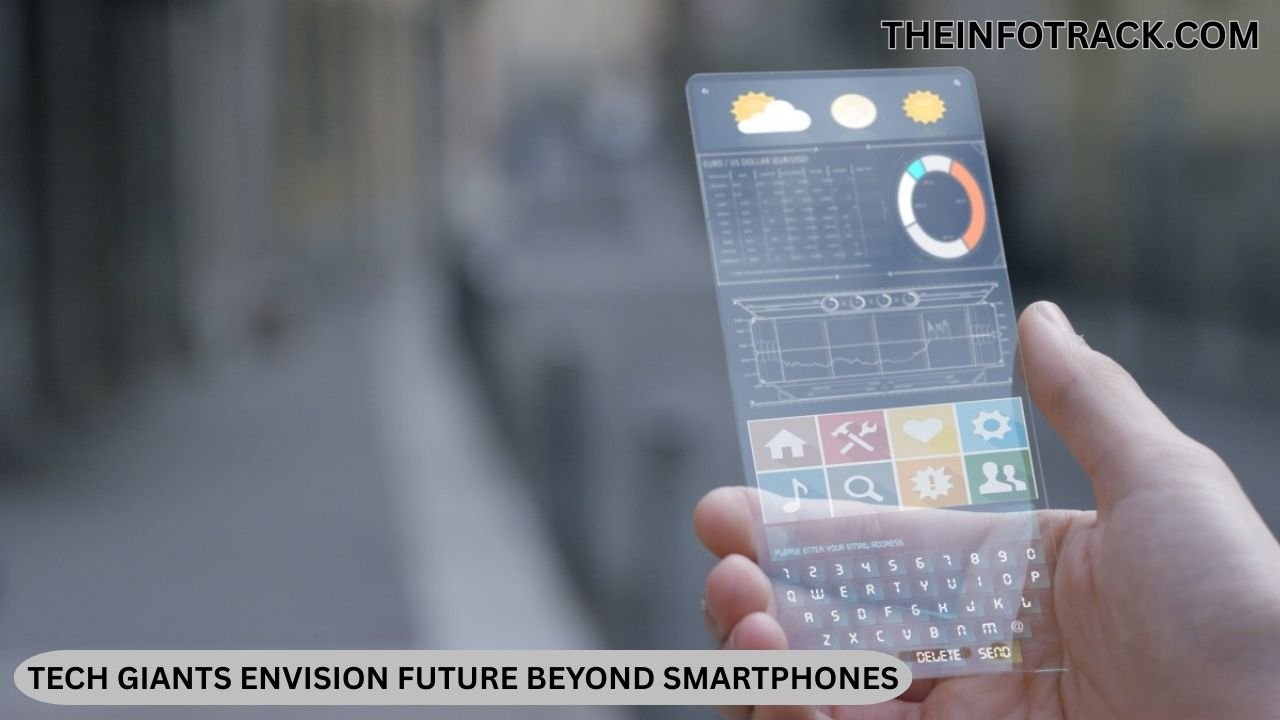
Introduction: Why “Tech Giants Envision Future Beyond Smartphones” Is Gaining Attention
The phrase tech giants envision future beyond smartphones has emerged as one of the most intriguing technology-related topics in recent years. For over a decade, smartphones have dominated digital life, shaping how people communicate, work, shop, and entertain themselves. However, as innovation accelerates and user behavior evolves, technology leaders are increasingly questioning whether smartphones will remain the center of digital interaction.
When people search tech giants envision future beyond smartphones, they are looking for insight into what comes next. This curiosity reflects a broader awareness that technological progress never stands still. Devices that once felt revolutionary eventually reach saturation, prompting innovators to imagine new platforms that redefine daily life.
This article explores how and why tech giants envision future beyond smartphones, what technologies may replace or supplement them, and how this shift could reshape society, work, and human interaction. Rather than focusing on speculation alone, this article examines the underlying forces driving this transformation and what it means for the future.
The Smartphone Era and Its Limitations
To understand why tech giants envision future beyond smartphones, it is essential to recognize the limitations of the smartphone era. Smartphones revolutionized access to information, connectivity, and productivity, becoming indispensable tools across the globe. However, their very success has created challenges.
Screens dominate attention, notifications fragment focus, and physical interaction with technology remains limited to taps and swipes. Battery constraints, ergonomic issues, and constant digital distraction have led to growing concerns about overdependence on smartphones.
As innovation matures, tech leaders recognize that the smartphone form factor may no longer be the most efficient or human-centered interface. These limitations have prompted tech giants to explore alternatives that feel more intuitive, immersive, and seamlessly integrated into daily life.
Why Tech Giants Envision Future Beyond Smartphones

The reason tech giants envision future beyond smartphones lies in the natural lifecycle of technology. Every dominant platform eventually gives way to the next evolution. Personal computers did not disappear with smartphones, but their role changed. Similarly, smartphones may not vanish entirely, but their dominance is likely to diminish.
Tech giants are driven by the pursuit of growth, differentiation, and long-term relevance. When markets mature and innovation slows, companies must look ahead. Envisioning a future beyond smartphones allows them to shape new ecosystems rather than react to disruption.
This forward-thinking mindset is essential for staying competitive in a rapidly changing digital landscape.
The Shift Toward Ambient Computing
One of the core ideas behind tech giants envision future beyond smartphones is ambient computing. This concept refers to technology that exists in the background, responding naturally to human presence and intent without requiring constant interaction with a handheld device.
Instead of pulling out a phone to perform tasks, users interact with their environment through voice, gestures, wearables, or intelligent systems embedded in everyday objects. This shift reduces friction and aligns technology more closely with human behavior.
Ambient computing represents a move away from screen-centric experiences toward seamless integration.
Wearable Technology as a Smartphone Alternative
Wearables play a major role in how tech giants envision future beyond smartphones. Devices such as smart glasses, watches, and health trackers already provide glimpses of this transition. These tools offer contextual information without demanding constant attention.
Wearables allow users to stay connected while remaining present in the physical world. Notifications become subtle, interactions become glance-based, and technology fades into the background.
As wearables become more powerful and independent, they may reduce reliance on smartphones for everyday tasks.
Augmented Reality and Spatial Computing
Augmented reality is another major factor in why tech giants envision future beyond smartphones. Instead of confining digital content to a small screen, augmented reality overlays information onto the physical world.
Spatial computing allows users to interact with digital elements as if they exist in real space. This creates immersive experiences for work, education, navigation, and entertainment.
By freeing digital interaction from handheld devices, augmented reality redefines how people engage with technology, making smartphones feel increasingly restrictive by comparison.
Artificial Intelligence as the New Interface
Artificial intelligence is central to the idea that tech giants envision future beyond smartphones. AI transforms how users interact with technology by anticipating needs, understanding context, and responding conversationally.
Rather than navigating apps and menus, users interact through natural language and intent-based commands. AI-driven assistants reduce the need for visual interfaces, making screens less essential.
As AI becomes more sophisticated, it enables technology to function proactively, further reducing dependence on smartphones.
Voice Interaction and Natural Communication
Voice technology plays a significant role in the future beyond smartphones. Speaking is one of the most natural forms of human communication, and voice interfaces eliminate the need for physical input.
When tech giants envision future beyond smartphones, they imagine environments where users speak to devices embedded in homes, vehicles, and public spaces. Voice interaction supports multitasking, accessibility, and convenience.
This shift makes technology more inclusive and less visually demanding.
Brain-Computer Interfaces and Emerging Possibilities
Looking even further ahead, some tech giants envision future beyond smartphones through brain-computer interfaces. These emerging technologies aim to connect digital systems directly to human neural activity.
While still experimental, such interfaces could allow users to interact with technology using thought alone. This radical departure from screens and physical input represents the ultimate evolution of human-computer interaction.
Although widespread adoption remains distant, the exploration of these ideas demonstrates how far beyond smartphones technology leaders are thinking.
Redefining Productivity and Work
The future beyond smartphones will reshape how people work. Smartphones enabled mobile productivity, but they also blurred boundaries between work and personal life. New technologies aim to restore balance by enabling more intentional interaction.
Tech giants envision future beyond smartphones where work tools are context-aware, collaborative, and less intrusive. Information appears when needed and disappears when not, reducing cognitive overload.
This evolution supports healthier work habits and improved focus.
Health, Well-Being, and Human-Centered Design
Health considerations strongly influence why tech giants envision future beyond smartphones. Prolonged screen time has been linked to eye strain, posture issues, and mental fatigue.
Future technologies emphasize human-centered design, prioritizing well-being alongside functionality. Wearables monitor health metrics, ambient systems reduce screen dependence, and interfaces adapt to user needs.
By addressing these concerns, technology becomes a supportive presence rather than a source of stress.
Social Interaction in a Post-Smartphone World
Smartphones have transformed social interaction, sometimes at the cost of face-to-face engagement. As tech giants envision future beyond smartphones, they explore ways to enhance human connection rather than replace it.
Technologies that operate in the background allow people to stay connected without constant distraction. Augmented reality can enhance shared experiences, while AI facilitates meaningful communication.
This shift aims to restore balance between digital and physical interaction.
Challenges in Moving Beyond Smartphones
Despite the vision, moving beyond smartphones presents challenges. Adoption requires trust, affordability, and seamless integration into daily life. Privacy and data security concerns become even more critical as technology becomes more embedded.
Tech giants must address these challenges thoughtfully to ensure acceptance. Designing systems that respect user autonomy and privacy is essential for long-term success.
Acknowledging these hurdles is part of responsibly envisioning the future.
The Role of Ecosystems and Integration
The success of a post-smartphone future depends on ecosystems rather than standalone devices. Tech giants envision future beyond smartphones by creating interconnected systems where devices work together seamlessly.
Homes, vehicles, workplaces, and public spaces become part of a unified digital environment. This integration reduces reliance on a single device and distributes functionality across contexts.
Ecosystem thinking ensures continuity and convenience.
Consumer Behavior and Readiness for Change
Consumer behavior plays a crucial role in determining how quickly the future beyond smartphones becomes reality. Users have grown accustomed to smartphones as all-in-one devices, making change gradual rather than abrupt.
Tech giants envision future beyond smartphones as an evolution rather than a replacement. Smartphones may coexist with new technologies before gradually fading into secondary roles.
This gradual transition allows users to adapt comfortably.
Cultural Impact of a Smartphone-Free Future
A future beyond smartphones would have profound cultural implications. Attention patterns, communication norms, and social expectations would shift. Technology would become less visible and more integrated into life.
This cultural transformation aligns with a growing desire for mindfulness and balance. By reducing screen dominance, people may experience deeper engagement with their surroundings.
Tech giants consider these cultural dimensions when envisioning the future.
Education and Learning in the Next Era
Education stands to benefit significantly as tech giants envision future beyond smartphones. Immersive learning experiences powered by augmented reality and AI offer deeper understanding and engagement.
Students interact with content spatially rather than passively consuming information on screens. Learning becomes experiential, adaptive, and personalized.
This transformation supports lifelong learning and skill development.
Why the Vision Matters Now
The reason tech giants envision future beyond smartphones now is timing. Technological capabilities have matured, societal concerns have surfaced, and user expectations have evolved.
This convergence creates an opportunity to redefine digital interaction in ways that prioritize human needs. Ignoring this moment could result in stagnation.
Visionary thinking ensures relevance and progress.
The Smartphone’s Role in the Future
While tech giants envision future beyond smartphones, this does not necessarily mean smartphones will disappear entirely. Instead, their role may shift from central hub to supporting device.
Smartphones could serve as backup interfaces or transitional tools while new platforms take precedence. This evolution mirrors how previous technologies adapted rather than vanished.
Understanding this nuance is key to realistic expectations.
Conclusion: Understanding Why Tech Giants Envision Future Beyond Smartphones
The phrase tech giants envision future beyond smartphones captures a pivotal moment in technological evolution. It reflects a collective recognition that the next era of innovation must move beyond screens and toward more natural, human-centered interaction.
Through ambient computing, wearables, augmented reality, artificial intelligence, and emerging interfaces, technology is becoming more intuitive and less intrusive. This transformation promises improved well-being, productivity, and connection.
As tech giants envision future beyond smartphones, they are not abandoning progress but redefining it. The future of technology lies not in what we hold, but in how seamlessly it supports human life.
Also read: Kinervus Explained: Meaning, Context, and Why People Search for It