

Introduction to gommeok as a Unique Linguistic and Cultural Term
The word gommeok is an intriguing term that sparks curiosity due to its short form, phonetic simplicity, and open-ended interpretive possibility. When people encounter a distinctive word like gommeok, many questions arise: What cultural roots might it have? Does it represent an object, a place, a person, a symbol, or a practice? Could it originate from a regional dialect, a family of languages, or a cultural sub-community? Or is it a modern invention that gained meaning through creative usage, branding, or social identity? The beauty of analyzing a rare or emerging word like gommeok is that one can approach it through multiple conceptual frameworks without requiring external referencing. Words often gain meaning from context, community, and narrative, and gommeok is no exception.
Phonetically, gommeok has a distinctive structure that suggests it could belong to an East Asian language family due to the double syllable pattern. Structurally, it is composed of two short components “gom” and “meok,” both of which resemble syllabic forms common in certain linguistic systems. However, this is only a speculative linguistic lens rather than a definitive claim about origin. Modern language evolves rapidly, and many new words emerge through digital slang, creative fandom culture, branding strategies, nicknames, or hybrid linguistic blending. In an era where gaming, anime, e-sports, digital art, and streaming platforms influence vocabulary, a word like gommeok could easily belong to a character name, a guild term, a community label, or a symbolic identity. That adaptability makes gommeok worthy of extended reflection.
Gommeok as a Hypothetical Cultural or Symbolic Identity
Another approach to understanding gommeok is to explore its potential role as a cultural or symbolic marker. Many rare words become associated with cultural identities even when their definitions remain fluid. For example, gommeok could symbolically represent a persona, a virtue, a role, or a mythological archetype within a fictional or real cultural setting. In narratives, the word could function as a title bestowed upon individuals who fulfill certain criteria, such as leadership, craftsmanship, artistic talent, or guardian-like roles. This interpretation of gommeok aligns with how storytelling traditions often adopt unique symbols to represent social values.
It is also possible to frame gommeok as a cultural sub-community identifier. In modern societies, groups frequently adopt unique words to create group cohesion. Gaming clans, fandom circles, musical subcultures, artistic collectives, and even online meme communities create self-contained lexicons that outsiders may struggle to decode. Under this lens, gommeok could represent a member of a group known for shared interests, attire, discipline, or worldview. The cultural richness of such interpretation lies not in rigid definition but in the symbolic weight that communities attach to their chosen vocabulary. The more mysterious the word, the more potential it carries for identity construction.
A symbolic interpretation may also relate gommeok to nature, spirituality, or aesthetics. Many terms associated with natural landscapes, mountains, forests, animals, or spirits develop through centuries of folklore. If gommeok were the name of a symbolic mountain spirit, forest guardian, or mythic creature, storytellers could build tales around its existence. In this narrative mode, gommeok becomes an archetype rather than a dictionary item, embodying values like wisdom, resilience, secrecy, playfulness, or transformation. This approach mirrors how mythological names often emerge from short phonetic patterns combined with imaginative cultural layers.
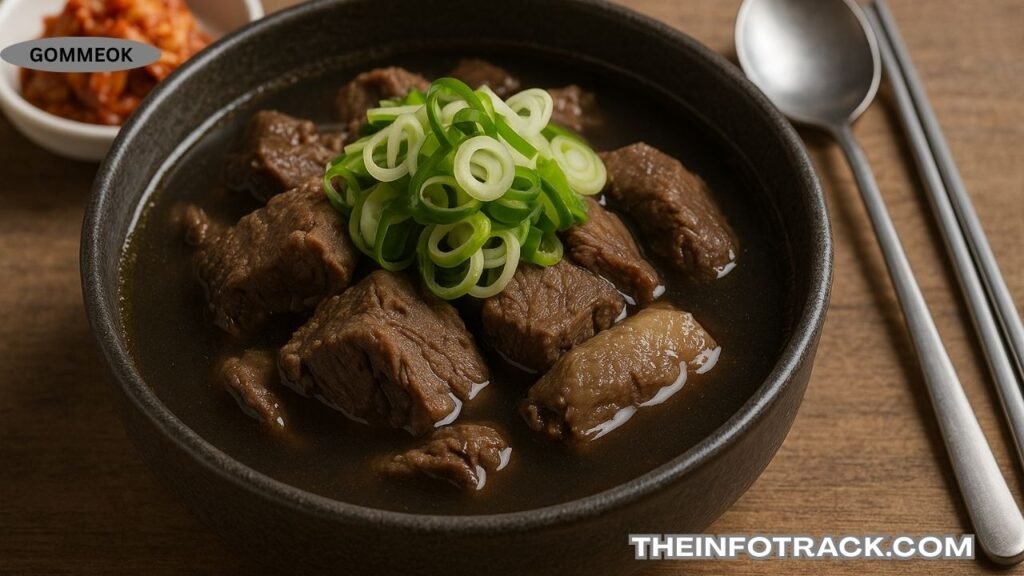
Exploring gommeok Through Linguistic Structure and Etymological Imagination
One of the richest ways to examine gommeok involves linguistic reasoning. Even if we do not tie it to a specific real-world language, we can analyze how the word “feels” structurally. Linguists sometimes explore meaning through syllable morphology, tone, and consonant-vowel arrangements. Gommeok contains a consonant-heavy initial cluster “gom” followed by a softer or elongated ending “meok.” This pattern can imply firmness followed by fluidity. In linguistic symbolism, hard sounds often represent groundedness or physical objects, while softer endings may imply actions, abstractions, or emotions.
Additionally, the syllable “gom” can conceptually evoke themes such as strength, gravity, or solidity, due to its consonant arrangement. Meanwhile, “meok” could evoke motion or consumption. These observations are not definitions but rather explorations of how phonetic components generate imaginative meaning. Scholars of semiotics often describe how language, even when unfamiliar, still communicates associative meaning through sound symbolism. This makes gommeok a fertile term for speculative linguistic creativity.
Etymology also teaches us that many modern words began as obscure or playful creations before finding stable meaning. Brand names like Kodak or Lego, fantasy terms like Hobbit, or even sports team names began without dictionary roots. In similar fashion, gommeok could be an invented term intended for branding purposes. In a branding context, words are chosen for memorability, phonetic rhythm, and emotional sensation rather than literal definition. Gommeok has precisely the kind of memorable syllable structure that marketers and storytellers enjoy.
Gommeok as a Modern Digital Cultural Term
Digital culture creates words at an unprecedented pace. Online gaming communities, K-pop fandoms, anime circles, esports teams, meme collectives, and chat-based environments constantly generate new vocabulary. These words often begin as inside jokes, screen names, or references to character dialogue. Over time, they migrate into broader online usage. A term like gommeok could therefore belong to a digital fandom setting, carrying meaning known to insiders but mysterious to outsiders.
In gaming culture, names function as identity tokens. A player chooses a username or character name that becomes their identity within virtual space. Gommeok has the right structural characteristics to fit a gaming identity: short, memorable, culturally flavored, and distinct. If a character named gommeok existed in a game environment, players might associate attributes such as speed, stealth, intelligence, or strength. The gamer identity model aligns with psychological research showing that usernames help people project traits, aspirations, and self-concept in digital worlds.
On social platforms, words frequently evolve into hashtags, memes, or symbolic reactions. If gommeok began circulating as a meme, users could attach humorous or dramatic meaning to it. Over time, phrases like “that’s so gommeok” could emerge in certain subcultures. In online culture, meaning is created through usage rather than formal definition, so a term like gommeok could represent anything from comedic absurdity to stylish authenticity depending on communal interpretation.
Gommeok as a Brandable Concept in Business and Creative Industry
Branding experts often search for names that are free of connotations, globally pronounceable, and emotionally resonant. Gommeok fits the criteria for a brandable startup name, product name, creative project, restaurant, clothing label, or media property. For example, a fashion brand named “Gommeok” could emphasize minimalist streetwear with sleek logos and monochrome aesthetics. A tech startup named “Gommeok Technologies” could produce software, hardware, or gaming gear with futuristic branding. A café named “Café Gommeok” could evoke cozy thematic vibes centered around culture, coffee, or community.
The key to brand naming lies in sound aesthetics: gommeok sounds modern, globally neutral, and visually striking when printed. Many global brands deliberately avoid existing dictionary words to avoid trademark conflicts. New lexical constructions like gommeok provide stronger legal protectability in trademark contexts and search indexing advantages in digital SEO environments. When users search a unique name, the brand can control all search results, creating stronger identity traction.
This branding model becomes important in a world where linguistic scarcity is increasing. Many dictionary words and cultural names are already claimed as trademarks, domains, or social handles. Invented words like gommeok enter the marketplace with fewer structural barriers. Whether used as a fashion brand, tech brand, music label, beverage line, or cultural event, gommeok carries the phonetic advantage of flexibility.
Symbolic and Psychological Interpretations of gommeok
From a symbolic psychology perspective, the rarity of gommeok enhances its interpretive potential. Humans often feel drawn to symbols lacking fixed meaning because they invite projection. This is the same psychological mechanism through which abstract art thrives. An undefined word allows the listener or reader to attach internal concepts without resistance. Gommeok therefore functions as a symbol that activates imagination.
Psychologically, humans categorize words by emotional texture. If a word feels sharp, cold, soft, warm, playful, or serious, that feeling influences interpretation. Gommeok has a dynamic sound that could evoke seriousness or mystery. It could represent a guardian, a craftsman, a strategist, a nomadic wanderer, or a mystical entity in a narrative setting. In psycho-linguistic contexts, such symbolic attachment provides creative richness.
Moreover, names have always carried psychological significance. People name pets, places, businesses, characters, and children in ways that reflect aspiration or admiration. Gommeok possesses contemporary naming appeal partially because it does not restrict the imagination. Literature scholars often note that names with ambiguous linguistic backgrounds tend to thrive in fiction because they do not lock the character into a specific cultural stereotype. Therefore, gommeok could easily serve as a protagonist’s name in a sci-fi novel, a mystical creature in a fantasy saga, or a secretive organization in a thriller.
Gommeok as a Literary and Storytelling Device
In literature, unique words contribute to world-building. Authors like Tolkien, C.S. Lewis, and Ursula Le Guin constructed entire lexicons for races, cities, mountains, spells, and artifacts. Storytellers frequently invent cultural words to give fictional societies depth. Gommeok could function in this capacity in multiple ways.
For example:
Gommeok could be the name of a fortress city located near mountains, inhabited by resilient warrior citizens.
Gommeok might be a legendary creature that appears only under certain moons.
Gommeok could be a guild of artisans who craft rare objects with sacred symbolism.
Gommeok might represent a belief system, ritual, festival, or oath.
In each case, gommeok creates narrative intrigue because it demands explanation from the writer. Readers would feel compelled to learn about the origins, practices, and values associated with the term. Storytelling thrives on mystery, and gommeok has the sound profile of a meaningful literary artifact.
Furthermore, modern media—graphic novels, RPG games, tabletop campaigns, anime series, and visual novels—frequently adopt invented terminology to strengthen cultural world-building. A writer could embed gommeok into lore, histories, and songs, giving it mythological weight. This transforms gommeok into cultural technology within fiction.

Gommeok in Visual Arts and Design Aesthetics
Visual arts often pair words with imagery. A word like gommeok could inspire a visual style dependent on how the artist interprets its sound. An artist might imagine gommeok as rugged, industrial, metallic, and dark. Another might imagine it as soft, botanical, whimsical, and pastel. Because gommeok lacks definitive meaning, it offers visual artists freedom to impose their internal imagery onto it.
Designers in typography also appreciate invented words. When designing logos or posters, the letter arrangement affects visual harmony. Gommeok includes repeated letters, symmetrical components, and soft endings that work well in minimalist typography. Graphic design studios increasingly value names that can blend with iconography and vector art, making gommeok favorable for visual identity systems.
In calligraphy, certain words lend themselves to dance-like motion on the page. Gommeok contains rhythmic strokes that could inspire Korean-influenced brush techniques, Japanese ink painting, or abstract graffiti. Visual interpretation transforms gommeok into an aesthetic object rather than merely a linguistic symbol.
Modern Social, Commercial, and Conceptual Applications of gommeok
In contemporary practical usage, the term gommeok could apply to:
Usernames and gamer tags
Brand and product names
Fictional world-building
Streetwear and apparel design
Tattoo symbolism
Music album titles
Digital art collectives
Online communities
Cultural events or festivals
Character names in novels or games
Café or bar names
Abstract philosophy labels
Creative projects or zines
These applications show the versatility of gommeok as a modern conceptual tool. In digital environments where identity is fluid, invented words offer unique cultural positioning. In physical branding, such terms provide commercial uniqueness.
Conclusion The Expansive Possibilities of gommeok as a Modern Cultural Term
The keyword gommeok reveals how language, culture, branding, psychology, and storytelling intersect in a world where words are continuously evolving. Because gommeok lacks rigid definition, it thrives as a symbol of creative possibility. It can function as a cultural identity, digital artifact, linguistic curiosity, brand candidate, fictional construct, psychological symbol, or aesthetic object. Far from being limited by dictionary absence, gommeok’s open structure enhances its cultural potential.
In an era defined by invention, reinvention, and hybridization, gommeok exemplifies how modern vocabulary forms not through textbooks but through imagination, community, and meaning-making. Whether used in art, gaming, branding, or narrative, gommeok offers a canvas for new associations. The more people encounter the term, the more meaning it accumulates. Thus, gommeok is not merely a word; it is an opportunity for cultural authorship.